
The History of Bigfoot: A Cross‑Cultural Legend and Its Modern Legacy
For as long as humans have lived alongside deep forests, towering mountains, and unexplored wilderness, stories have emerged of mysterious, human‑like giants lurking just beyond the edge of civilization. In North America, this figure is most widely known as Bigfoot or Sasquatch, but the creature’s history stretches far beyond modern sightings and regional folklore. From Indigenous oral traditions to global mythologies and contemporary eyewitness accounts, the legend of Bigfoot represents one of humanity’s most enduring mysteries. Its story is not confined to one culture or one continent; instead, it spans the world, appearing in countless forms and under countless names.
Ancient Origins and Cross‑Cultural Parallels
Long before the word “Bigfoot” appeared in newspapers, Indigenous peoples of the Pacific Northwest told stories of Sasq’ets, a being from the Halkomelem language of the Coast Salish people. Sasq’ets was not merely a monster but a powerful figure connected to the land, often portrayed as a guardian or a reminder of nature’s untamed spirit. These stories were passed down through generations, forming part of a cultural framework that explained the mysteries of the wilderness.
Other tribes across North America had their own versions. The Lummi spoke of Ts’emekwes, a nocturnal forest giant. The Iroquois described the Stone Giants, massive beings with impenetrable skin. The Choctaw warned of Shampe, a foul‑smelling creature whose odor alone could incapacitate a person. The Apache and Navajo told stories of large, hairy beings that lived in remote canyons and mountains, sometimes associated with spiritual or supernatural forces.
These legends are not unique to North America. In the Himalayas, the Sherpa people speak of the Yeti, a white‑furred giant adapted to the snowy peaks. China’s ancient texts describe the Yeren, a reddish, ape‑like creature said to inhabit remote forests. Australia’s Aboriginal peoples tell of the Yowie, a towering, shaggy being that roams the bush. In medieval Europe, the Woodwose, or “wild man of the woods,” appeared in art and literature as a muscular, hairy humanoid living outside society.
The global consistency of these stories raises a compelling question: how did so many cultures, separated by geography and time, imagine such similar beings? Whether these legends stem from shared human psychology, encounters with unknown animals, or something more literal, they form the foundation of the Bigfoot phenomenon.
The Rise of the Modern Bigfoot
The modern Bigfoot phenomenon took shape in the mid‑20th century. In 1958, a construction worker named Jerry Crew discovered enormous footprints near Bluff Creek, California. A local newspaper ran the story, using the term “Bigfoot” for the first time. The name stuck, and the legend exploded into mainstream culture.
But the most iconic moment came in 1967, when Roger Patterson and Bob Gimlin filmed a large, bipedal creature striding along Bluff Creek. The Patterson–Gimlin film remains one of the most debated pieces of footage in cryptozoology. Some experts argue the creature’s gait, proportions, and muscle movement are too sophisticated for a hoax; others insist it was a man in a suit. Regardless of its authenticity, the film cemented Bigfoot as a cultural phenomenon.
Throughout the 1970s and 1980s, sightings surged across the United States and Canada. Reports came from the dense forests of Washington, Oregon, and British Columbia, as well as the Appalachian Mountains and the swamps of Florida—home to the Skunk Ape, a regional variant known for its pungent odor.
Regional Bigfoot Variants Across the United States
While “Bigfoot” is the most widely recognized name, nearly every region of the United States has its own version of the creature—often with unique characteristics shaped by local landscapes and cultural traditions.
Pacific Northwest: Sasquatch
The Pacific Northwest remains the heart of Bigfoot country. Dense forests, rugged mountains, and vast wilderness areas provide the perfect backdrop for sightings. Here, the creature is most commonly called Sasquatch, a name rooted in Indigenous languages and traditions.
Florida: Skunk Ape / Swamp Ape
In the humid swamps of Florida, the creature is known as the Skunk Ape or Swamp Ape. Witnesses describe a smaller, faster, and more aggressive version of Bigfoot, often accompanied by a powerful, sulfur‑like odor. Sightings cluster around the Everglades, where thick vegetation and murky waters create ideal hiding places.
Ohio: Grassman
Ohio’s version of Bigfoot is the Grassman, named for its habit of building grass nests. Sightings are especially common in the rolling hills and forests of eastern Ohio. Some reports describe family groups, suggesting a more social creature than the solitary Sasquatch of the Pacific Northwest.
Arkansas: Fouke Monster
In the small town of Fouke, Arkansas, residents have reported encounters with a creature known as the Fouke Monster or Boggy Creek Monster. This regional variant gained national attention through the 1972 film The Legend of Boggy Creek, which dramatized local sightings.
Michigan: Dewey Lake Monster
Michigan’s Dewey Lake Monster became famous in the 1960s after a series of sightings near Sister Lakes. Witnesses described a tall, hairy creature with glowing eyes—details that echo Bigfoot reports from other regions.
Arizona: Mogollon Monster
In the forests of Arizona’s Mogollon Rim, people speak of the Mogollon Monster, a towering, red‑eyed creature known for its terrifying screams. Sightings often occur in remote pine forests, where the rugged terrain makes exploration difficult.
Other Regional Names
Across the country, Bigfoot goes by dozens of names, including:
Wood Booger (Virginia)
Wild Man (various states)
Old Yellow Top (Ontario)
The Beast of Whitehall (New York)
Honey Island Swamp Monster (Louisiana)
Hairy Man (By various Native American Cultures)
These regional variations highlight how deeply the Bigfoot legend is woven into American culture. Each name reflects local landscapes, fears, and storytelling traditions.
Modern Sightings and the Continuing Mystery
Today, Bigfoot sightings continue at a steady pace. Organizations like the Bigfoot Field Researchers Organization (BFRO) have cataloged thousands of reports, many from credible witnesses such as hunters, hikers, law enforcement officers, and park rangers. Common descriptions include:
Height between 7 and 10 feet
Dark, shaggy hair
Long arms and a powerful build
A strong, musky odor
Deep, resonant vocalizations
Modern technology has added new layers to the search. Trail cameras, thermal imaging, drone footage, and audio recordings have all been used to capture evidence. While none has conclusively proven Bigfoot’s existence, some recordings—such as the Sierra Sounds, eerie vocalizations captured in the 1970s—continue to puzzle researchers.
Sightings are not limited to North America. Reports of the Yowie in Australia, the Yeren in China, and the Orang Pendek in Indonesia persist to this day. Even in Russia, stories of the Almas, a wild, human‑like being, continue to surface.
Why Bigfoot Endures
The enduring fascination with Bigfoot speaks to something deeper than curiosity about a mysterious creature. Bigfoot represents the possibility that the world still holds secrets—that even in an age of satellites and smartphones, there remain corners of wilderness untouched and unknown. The legend taps into ancient human instincts: the fear of the dark forest, the allure of the wild, and the sense that we are not alone.
Whether Bigfoot is a flesh‑and‑blood animal, a cultural archetype, or a blend of both, its legacy is undeniable. From Indigenous oral traditions to modern documentaries, from regional folklore to late‑night campfire stories, Bigfoot continues to stride through our collective imagination—an enduring symbol of mystery in a world that often feels fully mapped.
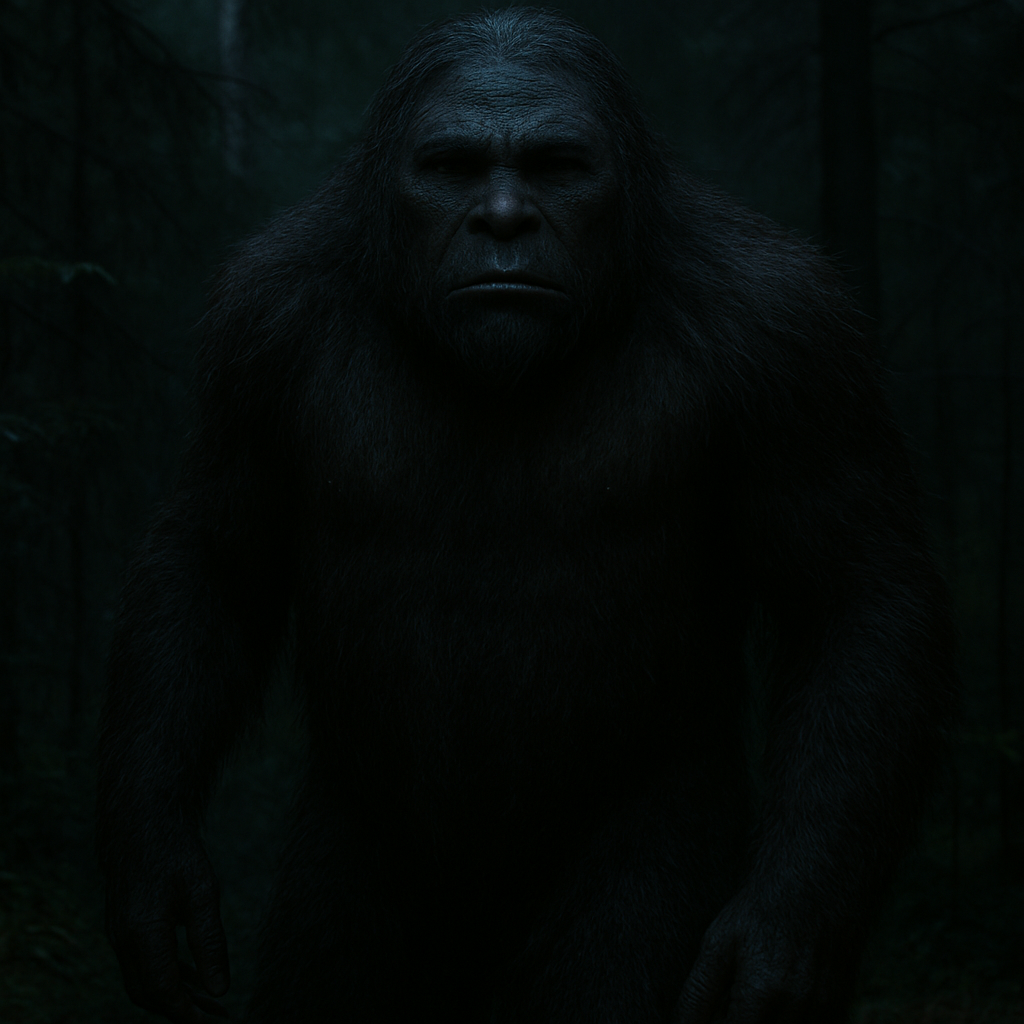
While North America is home to a wide variety of reported cryptids, E.C.H.O. recognizes the importance of every encounter and every species. Our primary focus, however, centers on Bigfoot/Sasquatch and Dogman, as these are the most frequently reported and most actively investigated within our region.
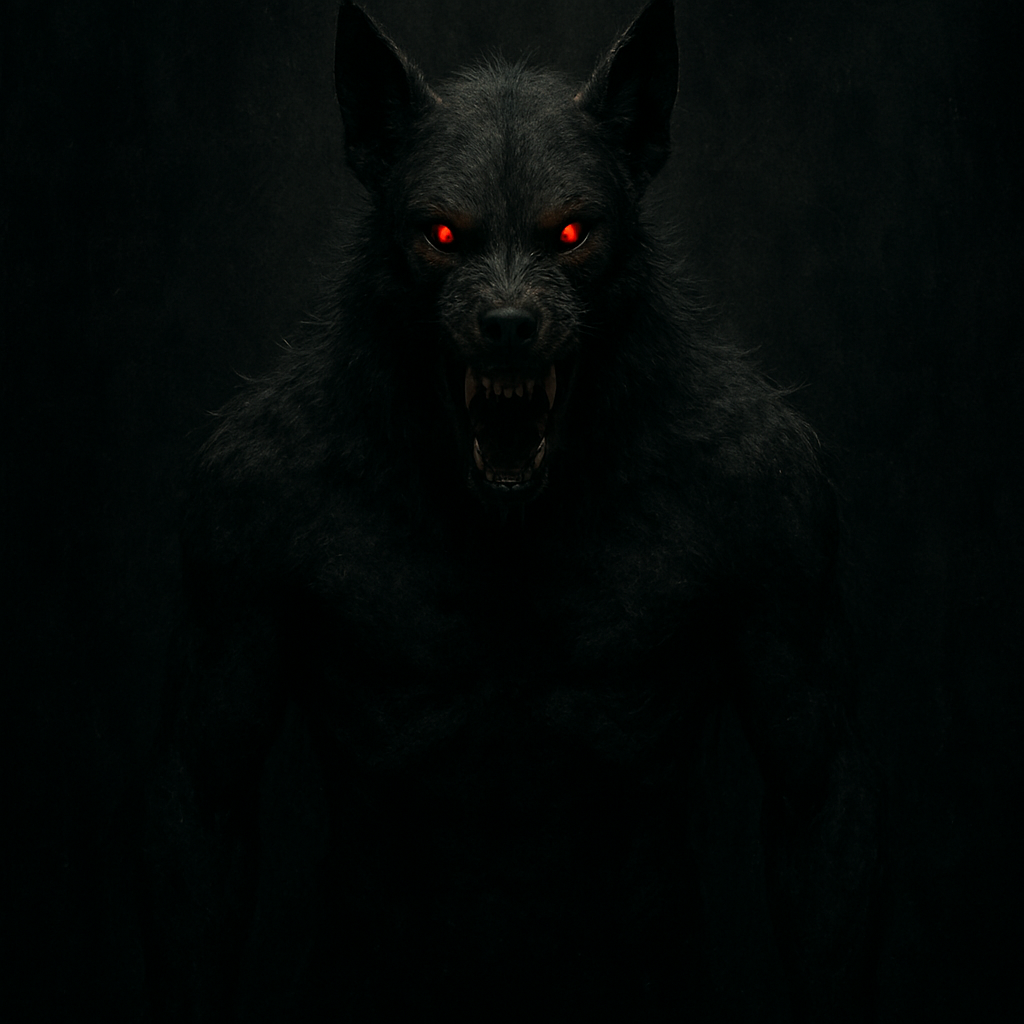
History of the Dogman
Origins and Early Folklore
The Dogman, a creature described as a tall, bipedal, canine-like being, occupies a unique place in North American cryptid lore. Reports of wolf-like humanoids predate modern sightings by centuries, with Indigenous tribes across the continent sharing oral traditions of beings that walked like men but bore the heads and fur of wolves. These stories often served as cautionary tales about respecting the wilderness and the spirits believed to inhabit it.
Among the earliest references are legends from the Anishinaabe, who spoke of the Wendigo and other shape-shifting forest spirits. While not identical to the modern Dogman, these beings shared traits such as immense height, predatory behavior, and a liminal existence between human and animal. Other tribes described wolf-warriors or guardians of sacred places, suggesting that the concept of a wolf-like humanoid was deeply embedded in pre-colonial North American cosmology.
European settlers arriving in the 17th and 18th centuries brought their own werewolf traditions, which blended with Indigenous lore. Frontier diaries and local newspapers occasionally mentioned “wolf-men” or “upright wolves,” though these accounts were often dismissed as superstition or misidentification. Still, the persistence of these stories laid the groundwork for the Dogman’s emergence as a distinct cryptid in the 20th century.
The Modern Dogman Phenomenon
The Dogman entered mainstream cryptid culture in the late 20th century, particularly after the 1987 release of a novelty song titled The Legend by Steve Cook, a Michigan radio host. Cook intended the song as an April Fools’ joke, but listeners began calling in with their own encounters—some predating the song by decades. These reports described a creature standing 6 to 7 feet tall, with digitigrade legs, a canine head, and glowing eyes. Unlike Bigfoot, the Dogman was often portrayed as aggressive or territorial.
Michigan became the epicenter of Dogman sightings, especially in the northern Lower Peninsula. The most famous cluster occurred near Wexford County, where loggers in the 1880s allegedly encountered a creature matching the Dogman’s description. Additional reports surfaced in the 1930s, 1960s, and 1980s, creating a pattern that some researchers believe follows a ten-year cycle.
Outside Michigan, Dogman sightings have been reported across the United States, including Wisconsin, Kentucky, Texas, and Arizona. The Beast of Bray Road, a well-known Wisconsin cryptid, shares many characteristics with the Dogman and is often considered part of the same phenomenon. Witnesses frequently describe fear, paralysis, or a sense of being watched—suggesting the Dogman may evoke a primal response rooted in humanity’s ancient relationship with predators.
Theories and Interpretations
Explanations for the Dogman vary widely, reflecting the creature’s ambiguous nature. Some researchers propose that the Dogman is a flesh-and-blood animal, possibly an undiscovered species of canid capable of bipedal locomotion. Supporters of this theory point to reports of muscle movement, breathing, and physical tracks.
Others argue that the Dogman may be a misidentified known animal, such as a large wolf or bear standing upright. However, many eyewitnesses insist the creature’s proportions and behavior do not match any known species.
A third interpretation places the Dogman in the realm of the paranormal. Witnesses sometimes report glowing eyes without a light source, sudden disappearances, or a sense of dread that feels supernatural. Some cryptid investigators suggest the Dogman may be an interdimensional being, a spirit guardian, or a manifestation of ancient folklore.
Finally, a cultural theory suggests that the Dogman is a modern evolution of the werewolf archetype. As society becomes more disconnected from nature, cryptids like the Dogman may represent a symbolic return of the wild—an embodiment of humanity’s fear and fascination with the unknown.
Dogman in Contemporary Culture
Today, the Dogman occupies a prominent place in cryptid research, podcasts, documentaries, and eyewitness testimony. Organizations dedicated to field investigation collect reports, analyze tracks, and interview witnesses. The creature’s reputation for aggression distinguishes it from Bigfoot, making Dogman encounters particularly compelling for researchers.
In popular culture, the Dogman appears in films, books, and online communities. Its image—muscular, wolf-like, and menacing—has become iconic within cryptozoology. The rise of social media has amplified sightings, allowing witnesses to share experiences anonymously and instantly.
Despite skepticism from mainstream science, the Dogman phenomenon continues to grow. Whether interpreted as a physical creature, a spiritual entity, or a cultural symbol, the Dogman remains one of the most intriguing and fearsome cryptids in North American lore.

© 2022. All rights reserved.